Oral assessments
Oral defence assessment
AI in Education


Today, two major challenges dominate conversations across UK secondary schools: teacher workload and the growing use of artificial intelligence.
As AI makes traditional homework, coursework and essays increasingly difficult to authenticate, schools face an important assessment challenge:
How can we determine what a student genuinely understands?
One answer lies in a long-established assessment method that remains highly relevant in the age of AI: oral assessment.
A short oral assessment or oral defence can support academic integrity by asking students to explain their reasoning, justify their choices and demonstrate how their answers connect to what they have learned. It should not be treated as a standalone solution to plagiarism, but as one part of a broader strategy for verifying authentic student understanding.
However, identifying a suitable assessment method is one thing. Delivering it consistently and at scale is another.
This guide explores four practical considerations for introducing oral assessments without creating an unmanageable administrative burden for teachers.
The first challenge is turning questions that would normally be assessed through essays, short-form answers or calculations into effective oral questions.
The goal is not simply to ask students to recall the same information aloud. Instead, oral assessments should evaluate the underlying knowledge and understanding through explanation, application and reasoning.
For example, a traditional biology question might ask:
“List the main structures found in a plant cell.”
An oral assessment could instead ask:
“Your classmate James says that chloroplasts and mitochondria perform the same function in a plant cell. How would you respond to him?”
The first question primarily tests recall. The second asks the student to apply the same core knowledge, identify a misconception and explain the difference between two cell structures.
This approach provides richer evidence of understanding because students must do more than repeat a memorised answer.
Platforms such as HeyCleo can support this process by helping teachers map assessments to the curriculum, generate appropriate question variations and focus each assessment on clearly defined knowledge and skills.
The questions being asked matter, but so does the way they are presented.
Before creating an oral assessment, teachers should define exactly what the assessment is intended to measure. Is the student being assessed on factual knowledge, application, reasoning, evaluation or their ability to justify a conclusion?
Once the learning objectives have been established, questions should be written in language that students can understand easily. The aim is to find the right balance between open-ended questions and clear guardrails.
Questions that are too broad can leave students unsure of what is expected. Questions that are too restrictive may only test recall and prevent students from demonstrating the full extent of their understanding.
A strong oral prompt should therefore:
The purpose is not to catch students out. It is to create a structured opportunity for them to demonstrate what they know and how they think.
Speaking assessments are not a perfect form of assessment. If they are introduced poorly, they can create a high-pressure environment that may prevent some students from demonstrating their actual ability.
Schools must therefore consider how students will be prepared and supported.
One of the most effective approaches is repeated exposure. A student completing an oral assessment for the twentieth time is likely to feel calmer and more confident than a student completing one for the first time.
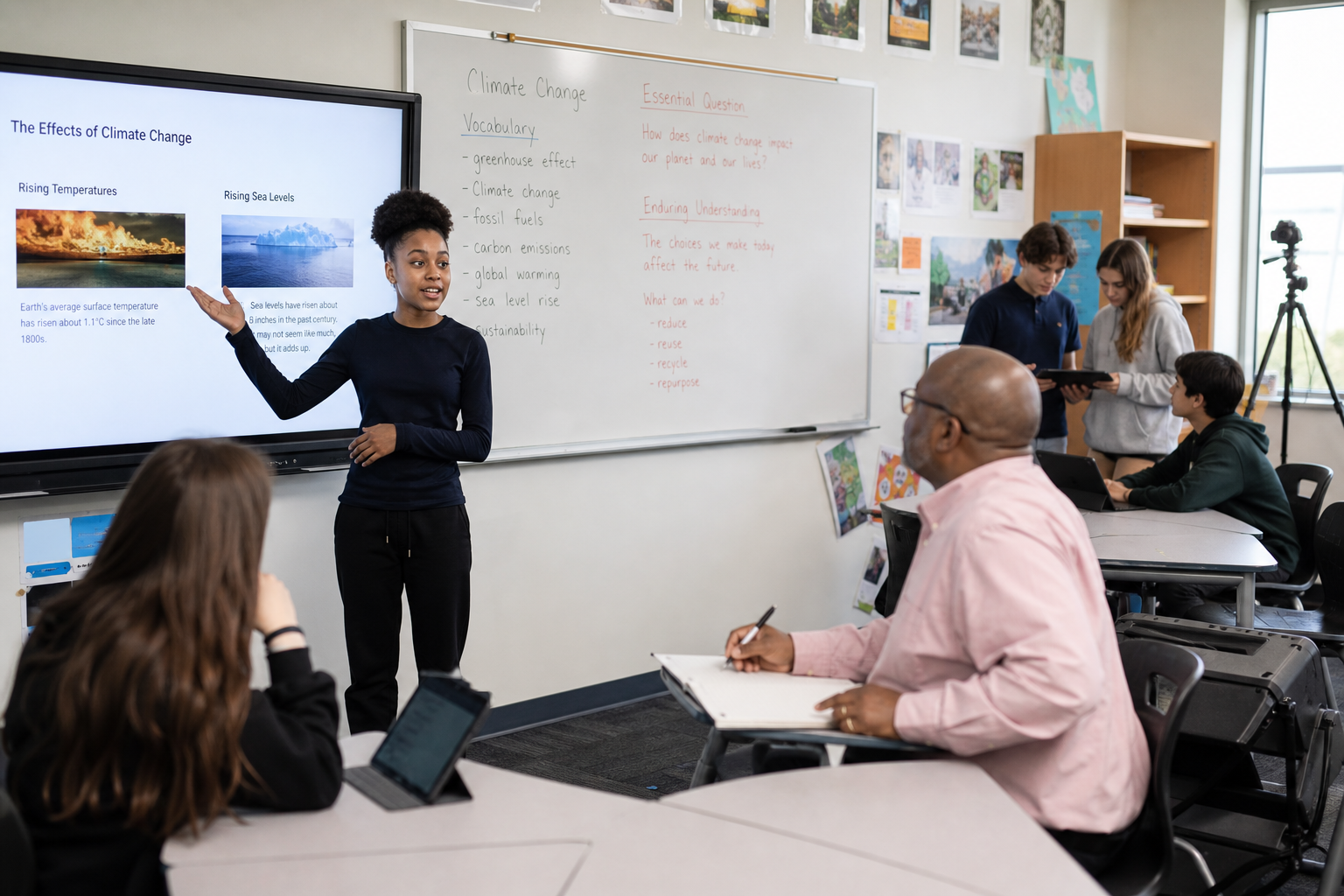
Oral assessment may be unfamiliar to many pupils, particularly outside subjects where speaking is already assessed. Introducing it gradually in a safe, low-stakes and non-judgemental environment can help students become comfortable explaining their thinking aloud.
HeyCleo allows students to complete oral assessments repeatedly, exposing them to different question variations and scenarios. This can help them build confidence while developing their ability to retrieve knowledge, apply concepts and communicate their reasoning.
Technology can also reduce barriers through features such as:
However, accessibility arrangements should never be applied through a one-size-fits-all process. Schools must consider the individual student and ensure that any adjustment supports access without changing the knowledge, skills or understanding being assessed.
Technology can generate transcripts, identify possible misconceptions and suggest scores, helping staff determine where to focus their attention.
However, these outputs should remain decision-support tools rather than final judgements.
Teachers must be able to review the student’s response, consider the surrounding context and correct any transcription or scoring errors. Schools should therefore establish:
For assessments that form part of regulated qualifications in England, Ofqual states that AI cannot be used as the sole marker. A human assessor must remain responsible for reviewing the work and determining the final mark. Ofqual’s guidance on AI in regulated qualifications reinforces the importance of human judgement, fairness and accountability.
This distinction matters. AI can help teachers process information, identify patterns and reduce repetitive administrative work, but it should not replace professional judgement.
The greatest barrier to traditional oral assessment has always been time. To help, here is a concise framework: